


Commercial Video Production Guide for Better Results
A commercial video production guide should begin with a business question, not a camera question. If a video looks polished but does not explain why a customer should choose your restaurant, product, hotel, or company, it is simply an expensive asset with limited commercial value. The strongest videos make the offer clearer, build confidence faster, and give marketing teams content they can use across multiple channels.
For business owners and marketing teams, commercial video production is not about producing a cinematic showreel. It is about creating visual content that supports real goals: increasing inquiries, improving product understanding, filling rooms, promoting a menu launch, strengthening recruitment, or giving a corporate brand a more credible presence.
Start With the Business Outcome
Before discussing locations, talent, or editing styles, define what the video needs to achieve. A product manufacturer may need to demonstrate quality control and production capacity. A cafe may need short, appetite-driven videos that encourage visits and orders. A property developer may need a walkthrough that helps prospective buyers understand space, finishes, and lifestyle value.
One primary objective usually produces a stronger result than trying to include every message in one video. A brand film can build trust, but it may not be the right asset for a limited-time promotion. A product demonstration can improve conversion on an e-commerce page, but it may need a different pace and format from a corporate recruitment video.
Ask three practical questions at the start: Who needs to see this? What should they understand or feel after watching? What action should they take next? These answers shape every production decision that follows.
Build a Clear Message Before the Shoot
A commercial video needs a focused message that can be understood quickly. Viewers often see only the first few seconds on social media, while website visitors may watch longer if the content answers a relevant question. The message must work for the viewing environment.
Start by identifying the strongest proof points. These may include product features, experienced staff, fresh ingredients, efficient processes, facility scale, customer service, or a distinctive location. Avoid broad statements such as "high quality" unless the video shows what quality looks like. Close-up food preparation, precise machinery, clean packaging, professional service, and well-designed spaces provide visual evidence.
A useful script does not need to be long. In many cases, a concise structure is enough: introduce the need, show the solution, support it with proof, and end with a direct next step. The wording should sound like your brand, but the visuals should carry much of the explanation.
Match the Format to the Channel
A single horizontal video is rarely enough for a full campaign. Websites, digital advertisements, LinkedIn, Instagram Reels, YouTube, digital displays, and sales presentations all create different viewing conditions. Planning for these formats before filming saves time and protects the quality of the final assets.
For example, a hotel may need a main brand video for its website, vertical room and dining clips for social media, and short event-space videos for sales outreach. A manufacturer may require a two-minute corporate overview plus concise process clips for trade presentations and recruitment. The footage can come from one well-planned production, but each deliverable should have a clear role.
Pre-Production Is Where Results Are Won
The shoot day is visible. Pre-production is where commercial value is created. This stage turns a broad idea into a workable plan, controls unnecessary costs, and helps the team capture the right footage without rushing important details.
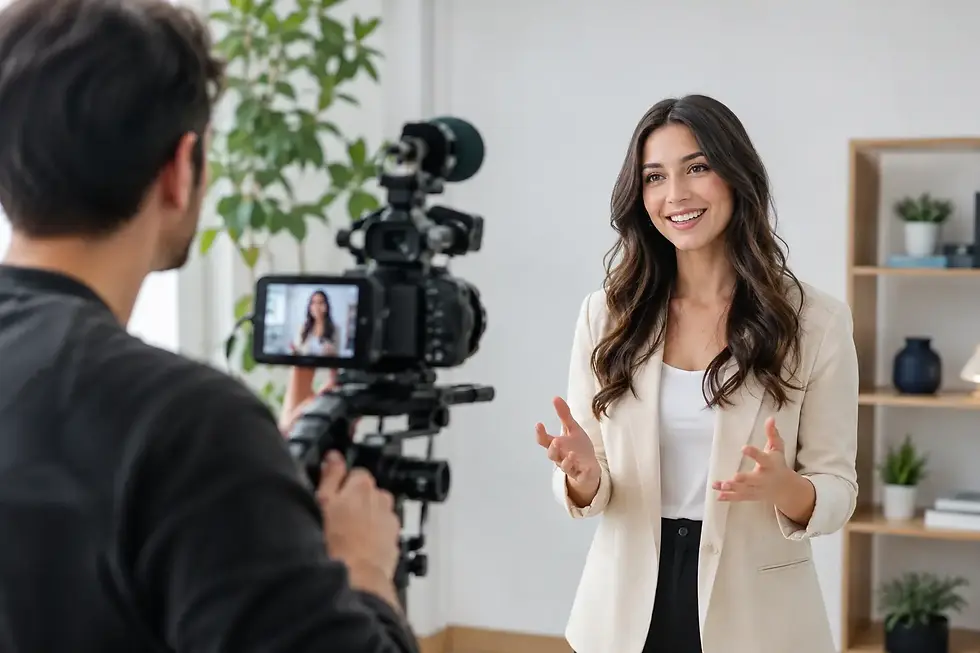
A professional production plan typically covers the message, script or interview questions, shot list, schedule, locations, styling, products, talent, wardrobe, equipment, music direction, and deliverables. Not every project requires a large crew or complex setup. A simple interview-led corporate video can be highly effective when the content, lighting, sound, and framing are handled properly.
For food and product videos, preparation matters even more. Products must be camera-ready, packaging should be checked for damage or outdated labels, and every variation required for the campaign should be available. For industrial shoots, production schedules, safety requirements, site access, and clean work areas should be confirmed in advance.
When stakeholders review a treatment, script, or shot list before the shoot, approvals become easier later. This reduces the risk of discovering that a key product, department, or message was missed after the crew has left.
What to Capture on Shoot Day
A commercial video should capture more than the obvious hero shots. Hero shots establish the brand and create impact, but supporting footage gives editors the flexibility to build a compelling story across multiple formats.
A typical shoot plan should include the following distinct material:
Wide shots that establish the venue, factory, showroom, hotel, or working environment.
Medium shots that show people, service, process, and customer interaction.
Detailed close-ups that highlight texture, craftsmanship, ingredients, product features, or equipment.
Brand moments such as signage, packaging, uniforms, menu details, and relevant visual identity.
Action footage that shows the product or service being used in a natural, credible way.
Sound deserves the same attention as visuals. Poor audio can make a well-lit interview feel unprofessional within seconds. If executives, chefs, sales leaders, or customers are speaking on camera, use appropriate microphones and select a quiet filming environment whenever possible. Background noise can be reduced in editing, but it cannot always be removed without affecting clarity.
Lighting also changes perception. It helps food look fresh, products look premium, people look approachable, and interiors look inviting. Natural light can be useful, but it is not always consistent. Controlled lighting gives the production team greater control over color, reflections, and the overall mood of the footage.
Editing for Attention and Conversion
Editing is not just the final assembly step. It is where the story takes shape. The editor determines what viewers see first, how quickly information is delivered, where the brand message appears, and how the video supports a call to action.
The opening needs to earn attention quickly. For a restaurant, that may be the movement of a signature dish being prepared. For a product, it may be the feature that solves the customer’s problem. For a corporate video, it may be a confident statement paired with clear visual proof of capability.
Keep the pacing aligned with the audience and platform. Fast edits may suit short social content, but a corporate audience may need enough time to understand technical processes or business credentials. There is no universal ideal duration. A 15-second advertisement, a 45-second social video, and a three-minute company profile can all perform well when each has a specific purpose.
Captions are often valuable, especially for mobile viewing and videos that use spoken interviews. Brand graphics should be clean and consistent, but they should not cover important visuals or interrupt the flow. The goal is clarity, not visual decoration.
Plan for Reuse, Not One-Time Publishing
The best commercial video projects create a content library, not one final file. This is especially valuable for businesses with regular promotions, product launches, seasonal campaigns, or ongoing social media activity.
During planning, identify the extra clips that can extend the life of the shoot. Short customer-facing clips, staff profiles, behind-the-scenes process footage, product details, venue highlights, and testimonial excerpts can become useful assets long after the main video launches. This approach improves the return on your production budget and keeps brand visuals more consistent across campaigns.
For companies serving Johor Bahru, Kuala Lumpur, Singapore, and other regional markets, localized versions may also be useful. The core footage can remain the same while subtitles, calls to action, language, or selected scenes are adjusted for different customer groups.
Measure What Matters After Launch
A video’s performance should be assessed against its original purpose. View count alone can be misleading. A high number of views may not help if the audience is not relevant or viewers leave before the main message appears.
For awareness campaigns, review reach, watch time, and completion rate. For website content, look at page engagement, inquiry behavior, and whether visitors move further into the site. For product and promotional campaigns, compare clicks, add-to-cart activity, bookings, leads, or sales results against the campaign objective.
Use these insights to improve the next production. If viewers respond strongly to product demonstrations, create more of them. If interview clips outperform polished brand statements, adjust the content mix. Good video strategy improves over time because it is guided by both creative judgment and business evidence.
A commercial video should make it easier for customers to trust what you offer and easier for your team to communicate it consistently. When the message, planning, production quality, and distribution are aligned, the camera becomes more than a creative tool. It becomes part of your sales and marketing system.



Comments